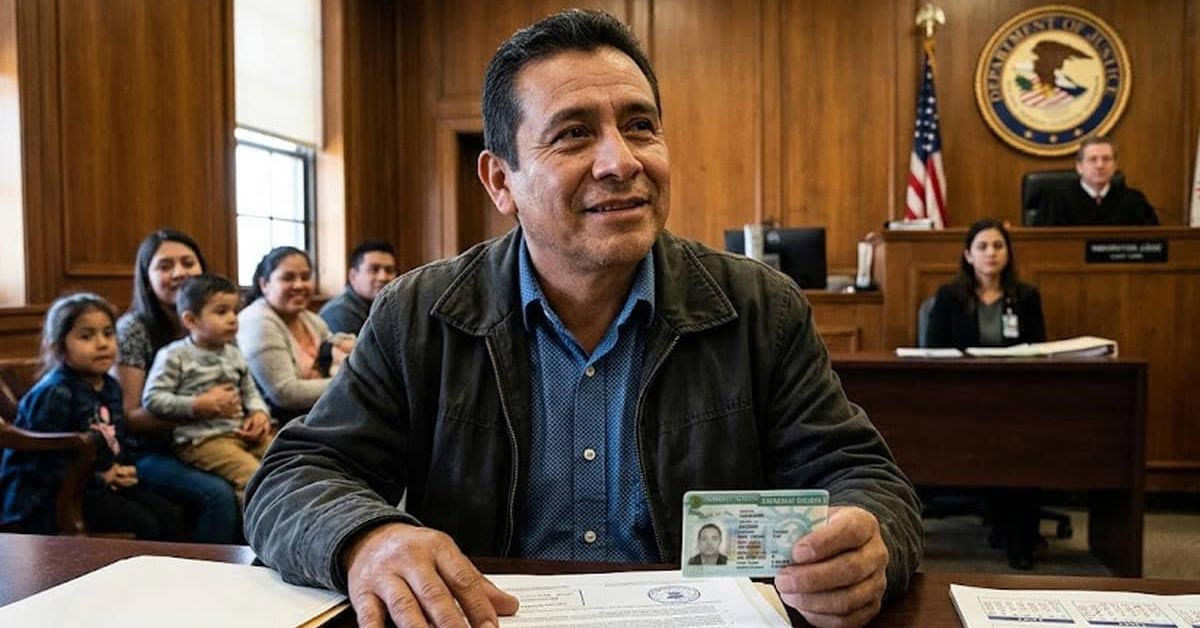

The concept known as the "10-year rule" in United States immigration law does not represent an automatic Green Card application; rather, it functions strictly as a deportation defense formally known as Cancellation of Removal, litigated exclusively before an immigration court (EOIR). Undocumented individuals cannot initiate the process by submitting a form to USCIS (U.S. Citizenship and Immigration Services) prior to facing official deportation proceedings. Contrary to the widespread street myth of "amnesty after 10 years," the system demands strict legal standards, including continuous physical presence, a pristine criminal record, and definitive proof of "Exceptional and Extremely Unusual Hardship" for immediate U.S. citizen relatives. Yellow Law Group bypasses rumors to dissect the exact legal defense strategies required to secure your status and prevent deportation.
Urban Myths Versus Federal Legal Realities
Immigration laws deny undocumented individuals the privilege to adjust their status voluntarily based solely on time spent inside the country. The following table contrasts common street myths with strict federal court realities:
| Common Misconception (Urban Myth) | Federal Legal Reality (Cancellation of Removal) |
|---|---|
| I can submit a form to USCIS and get a Green Card after 10 years. | The defense is presented exclusively to an immigration judge when an individual is actively facing deportation proceedings. |
| Paying taxes and having a clean record guarantees my Green Card. | A clean record remains mandatory but insufficient. Proving "Exceptional and Extremely Unusual Hardship" dictates the final outcome. |
| I can file the application online by myself. | You face a trained ICE prosecutor and a federal judge. A robust courtroom defense strategy is an absolute necessity. |
Transforming Fear into Opportunity: The Notice to Appear (NTA)
Receiving a Notice to Appear (NTA) in your mailbox or during a routine traffic stop initially triggers the fear of permanent separation from your family and established life. Experienced individual immigration lawyers view the exact document not as the end, but as the official commencement of your legalization process. Requesting Cancellation of Removal requires an active trial. For undocumented individuals living in the shadows for years, the federal courtroom transforms into the sole legal arena to assert rights and transition to permanent residency (Green Card).
Mandatory Requirements for Cancellation of Removal
Persuading an immigration judge to terminate a deportation order and grant permanent residency relies on the simultaneous and flawless execution of four statutory prerequisites:
- 10 Years of Continuous Physical Presence: Documenting uninterrupted residence within U.S. borders for the 10 years immediately preceding the NTA issuance through tax records, leases, and utility bills (excluding brief, casual, and innocent departures).
- Good Moral Character: Fulfilling tax obligations, integrating into the community, and maintaining a transparent moral record throughout the specified 10-year period.
- Absence of Disqualifying Criminal Convictions: Exhibiting a record free of aggravated felonies or Crimes Involving Moral Turpitude (CIMT) that mandate deportation under the Immigration and Nationality Act (INA).
- Exceptional and Extremely Unusual Hardship: Proving that the execution of the removal order would cause suffering to a U.S. citizen or Lawful Permanent Resident (LPR) spouse, parent, or child that extends far beyond the standard difficulties associated with deportation.
The Most Complex Strategy: Proving "Hardship"
Concrete documents easily satisfy the first three conditions. The fourth condition alone determines the ultimate verdict. Immigration courts (EOIR) and precedent decisions (BIA Appeals) routinely reject standard arguments citing lower educational standards, adaptation issues, or language barriers in the home country. Judges demand life-threatening risks or profound suffering. A U.S. citizen child suffering from a severe medical condition requiring constant treatment—such as severe asthma, the autism spectrum, or rare genetic disorders—where the home country lacks equivalent medical intervention, fundamentally alters the trial's trajectory. Forcing a federal judge to accept such high standards requires an impeccable case file supported by comprehensive medical reports, psychological evaluations, and expert witness testimonies.
The Necessity of a Specialized Immigration Court Attorney
Cancellation of Removal trials share no similarities with standard visa applications or routine form submissions. The government's sole objective inside the courtroom is your immediate physical removal. You must defend your life, your children's future, and your American dream against a highly trained Department of Homeland Security (ICE) prosecutor. Yellow Law Group stands by your side throughout the entire process, from the initial immigration court bond hearings to the final verdict. We support your fight for existence in the U.S. with transparent, aggressive legal strategies.
If you received a court summons and remain determined to secure your family's roots in America, contact Yellow Law Group experts to analyze your case and build an impenetrable line of defense. Proper strategy and flawless timing turn the courtroom into the birthplace of your permanent residency.