
Free Case Evaluation

Evaluate your case with our experienced attorneys.

Get Started

US Slip and Fall (Premises Liability) Attorney

Property owners have a legal obligation to keep their premises reasonably safe for visitors and customers.

  • Duty of Care: Establishing the property owner's or manager's legal responsibility based on your status as an invitee or licensee.
  • Commercial vs. Residential: Pursuing claims against grocery stores, hotels, apartment complexes, or private homeowners.
  • Code Violations: Investigating if the building violated state or municipal building codes, such as improper stair dimensions or lack of handrails.

Just because you fell on someone's property doesn't automatically mean they are liable. We must prove negligence.

  • Actual or Constructive Knowledge: Proving the owner knew about the hazard, or the hazard existed long enough that they should have known about it.
  • Failure to Warn: Demonstrating that the property owner failed to fix the hazard or place adequate warning signs (like "Wet Floor" cones).
  • Preserving Evidence: Quickly securing security camera footage before it is recorded over to prove how long the spill or hazard was present.

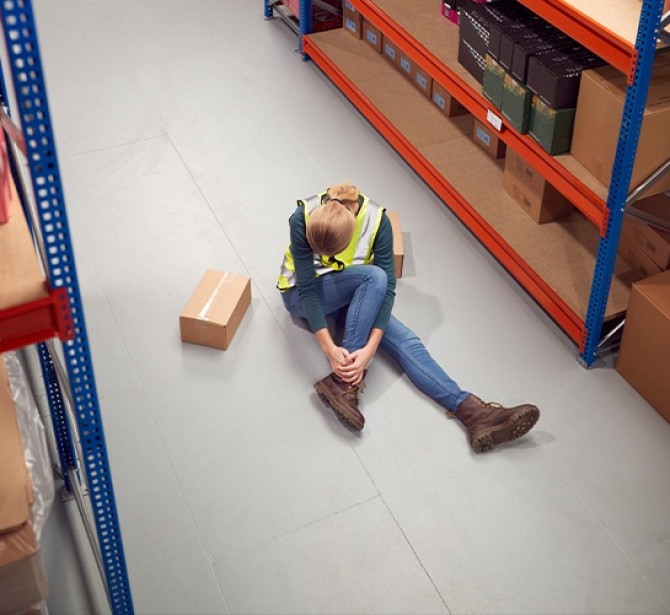
Slip, trip, and fall accidents can cause severe injuries like traumatic brain injuries, spinal cord damage, and broken hips.

  • Indoor Dangers: Liquid spills, recently mopped floors, torn carpeting, loose floorboards, and inadequate lighting in stairwells.
  • Outdoor Dangers: Icy or unsalted sidewalks, cracked pavements, hidden potholes in parking lots, and poorly maintained escalators/elevators.
  • Negligent Security: Claims involving assaults in parking lots or hotels due to broken locks, poor lighting, or lack of security personnel.
US Slip and Fall (Premises Liability) Attorney

If you fell and were injured in the US at a store, restaurant, workplace, or apartment because of an unsafe surface, you may have the right to claim compensation from the property owner or business. The legal name for these cases is premises liability. Yellow Law Group manages files arising from hazards such as wet floors, broken stairs, poor lighting, and ice, from assessment to recovery.

Winning these cases depends on showing whether the owner knew of the hazard (notice) and whether they took reasonable precautions. We cover how liability is established, comparative fault, and the steps to take after a fall in detail in our slip and fall claim guide.

The Basis of Liability: Did the Owner Know of the Hazard?

Not every fall gives rise to compensation. For the owner to be liable, you must show they knew of the dangerous condition or, with a reasonable inspection, should have known of it (constructive notice). For example, a spilled liquid left uncleaned for a reasonable time can give rise to the owner's liability.

The type of visitor also affects the outcome: a business's customer (an invitee) has the highest protection, and the owner is obligated to inspect the premises, fix hazards, and warn. Some states, such as California, removed this distinction and apply a single reasonable-care standard. We determine which rule governs your file and the evidence needed accordingly. For the legal basis of premises liability, see the Cornell Law School resource.

What Compensation Can You Claim?

Slip and fall compensation covers hospital and treatment costs, the future care cost of injuries such as fractures or permanent disability, lost income for the time you could not work, and the pain and suffering you experienced. In older adults, fall injuries such as hip fractures can be long-lasting and severe.

The amount is set by the severity of the injury and the comparative fault. In most states, an injured person can recover even if found partly at fault (such as not watching a slippery floor); only the amount drops by the share of fault. We assess your file under these rules and build the claim in full.

Facing the Insurance Company and the Business

Slip and fall compensation is usually paid from the property owner's or business's liability insurance. Insurers often attribute the accident to your carelessness, ascribe the injury to a pre-existing condition, or push a low settlement. An early settlement you sign can leave you unable to cover treatment costs that arise later.

We gather the scene records and security camera footage before they are lost to time, handle the insurance talks on your behalf, and go to court if needed. Fast evidence collection is decisive in this type of case; the slippery floor gets cleaned and the camera footage gets erased.

Your Slip and Fall Rights as an Immigrant or Undocumented Person

A common concern in the immigrant community is that undocumented people cannot claim compensation or that filing will put their status at risk. In reality, slip and fall compensation is independent of the injured person's immigration status; whatever your status, you can claim your loss.

We cover the effect of immigration status on injury cases and uninsured treatment paths in our personal injury rights for immigrants guide. Running the immigration and injury file under one roof lets you pursue your rights without putting your status at risk. For other injury types, see our personal injury legal service.

Why Yellow Law Group? (No Upfront Fee)

Yellow Law Group serves from its headquarters in Plano (Texas), with offices in Chicago (Illinois), Irvine (California), Alpharetta (Georgia), and Fairfield (New Jersey). Running both immigration and personal injury law under one roof is a critical advantage for the immigrant community: your slip and fall compensation is managed by a team mindful of your status.

Slip and fall cases run on a no-upfront (contingency) basis; the attorney fee is paid only if compensation is won. You can review our attorney profiles on our team page and schedule a free initial consultation through our contact page.


Got Questions? We're on it.

US Slip and Fall (Premises Liability) Attorney • Frequently Asked Questions

No, not every fall gives rise to compensation. For the owner to be liable, you must show they knew of the dangerous condition or should have known of it through a reasonable inspection (notice). For example, a spilled liquid left uncleaned for a reasonable time can create liability. Evidence determines the strength of your file; scene and camera records are critical.

In most states, yes. Under the comparative negligence rule, you can recover even if partly at fault; only the amount drops by your share of fault. California applies a pure comparative rule (partial recovery at any share); Texas, Illinois, and New Jersey apply a threshold that bars recovery if your fault exceeds 51%. Your file is assessed under that rule.

First get medical care and document your injury. If possible, photograph where you fell and the dangerous condition (wet floor, broken step), get witness information, and report the incident to the business/owner to create a written record. You should act fast so the security camera footage is not erased; these records are the strongest evidence in the case.

There is no fixed figure; compensation is set by the severity of the injury and the comparative fault. Hospital and treatment costs, future care costs, lost income, and the pain and suffering can be claimed. In older adults, injuries such as hip fractures raise the amount. We can assess your file and offer a realistic range.

Liability depends on who controlled the area where the accident occurred. In a shopping center, the tenant business may be liable for an in-store accident, while the owner or management may be liable for an accident in a common area. In some files, more than one party is liable. We assess who carries which obligation in your file and direct the claim to the right party.

In most states, the period is two years from the date of the accident; California, Texas, Illinois, and Georgia are in this group. Missing the deadline removes the right to sue entirely. Because evidence also fades fast (cleaned floors, erased camera footage), getting an assessment as soon as possible after the accident is critical.

Yes. Slip and fall compensation is independent of the injured person's immigration status; undocumented people can also claim their losses. Filing usually does not directly put your status at risk. Working with a team that runs both immigration and injury law moves the process forward safely.

A warning sign alone does not remove liability; the sign must be visible, adequate, and suited to the hazard. Insurers often use the sign or the victim's carelessness as a defense. Whether the sign was actually adequate is assessed with scene evidence and witness statements; the outcome depends on the concrete facts of the file.

No. Slip and fall cases run on a no-upfront (contingency) basis: the attorney fee is paid only if compensation is won and from the amount recovered. If the case yields nothing, you do not pay the attorney fee. This structure lets you pursue your rights without financial means.

With our headquarters in Plano (Texas) and offices in Chicago, Irvine, Alpharetta, and Fairfield, we run both immigration and personal injury law under one roof. This is a critical advantage for the immigrant community: your slip and fall compensation is managed by a team mindful of your status. We gather scene evidence fast, run the process on a no-upfront basis, and build your file on a level footing against the business and insurer.