
Securing permanent residency in the United States without an employer sponsor relies heavily on the EB-2 National Interest Waiver (NIW). The adjudicative standard for this visa category centers entirely on the Matter of Dhanasar precedent (26 I&N Dec. 884). To win an NIW case in 2026, foreign nationals must prove their proposed endeavor holds both "Substantial Merit" and "National Importance" under this strict legal framework. Yellow Law Group routinely analyzes Administrative Appeals Office (AAO) decisions to map out winning arguments, particularly for professionals in high-impact sectors like artificial intelligence, healthcare, renewable energy, and modern agriculture.
The Legal Framework of the Dhanasar Three-Prong Test
Before 2016, the NYSDOT standard forced applicants to prove their work would have a geographic impact spanning the entire country. The Matter of Dhanasar ruling fundamentally shifted this perspective. Today, the USCIS Policy Manual focuses on the intrinsic value of the work and its alignment with broader U.S. strategic interests, rather than demanding a coast-to-coast geographic footprint. Bypassing the PERM Labor Certification A standard EB-2 visa requires a U.S. employer to sponsor you and complete the PERM Labor Certification process.
The NIW rests on a different premise: your qualifications and proposed endeavor are so valuable to the United States that testing the domestic labor market would actually run counter to the national interest. This grants you the freedom to self-petition for a Green Card. EB-2 Employer Sponsorship vs. NIW Standard EB-2 cases focus on proving there are no minimally qualified U.S. workers available for a specific job. An EB-2 NIW petition relies entirely on the candidate’s unique background and the massive positive externalities their project will generate for the U.S. economy or society.
Deconstructing the 3 Dhanasar Prongs for USCIS Approval
Your immigration file succeeds only if the adjudicating officer can confidently answer "yes" to these three foundational criteria:
- Prong 1: Substantial Merit and National Importance. Does your proposed work have intrinsic value, and does it align with national priorities? Operating a local medical clinic usually impacts only that specific town. Developing a scalable telemedicine protocol or conducting federally funded cancer research possesses clear National Importance.
- Prong 2: Well-Positioned to Advance the Endeavor. Are you the right person to execute this plan? USCIS evaluates your past record of success, advanced degrees, patents, startup funding, and industry reputation.
- Prong 3: Balance of Benefits Favoring the Waiver. On balance, does the United States gain more by granting you this waiver than it would by strictly enforcing the standard PERM labor certification process?
Sector-Specific AAO Precedent Map: What Wins in 2026?
We view the law as your gateway to opportunity. Based on our hands-on experience and a thorough review of recent AAO decisions, we have isolated the specific strategic angles that consistently win across four core industries.
1. Healthcare and Medical Sciences
Being an excellent practicing physician does not automatically satisfy the NIW requirements. Successful medical petitions anchor their arguments on:
- Clinical work directed specifically at Medically Underserved Areas (MUAs) or Health Professional Shortage Areas (HPSAs).
- Targeted research on chronic diseases, pandemic preparedness, or specialized treatments that impact public health metrics.
- Biotech innovations and medical device engineering that reduce healthcare costs.
2. Technology, Artificial Intelligence, and Cybersecurity
Recent White House executive orders on artificial intelligence have elevated this sector to top priority for National Interest Waivers.
- Software Engineers: Rather than focusing on routine coding, the petition must highlight contributions to national cybersecurity infrastructures, autonomous systems, or FinTech architectures.
- Data Scientists: You must provide hard data showing how your predictive models drive economic efficiency or secure critical supply chains.
3. Green Energy and Sustainability
Professionals developing EV battery technology, reducing industrial carbon footprints, or improving solar grid efficiency have a direct path to satisfying the first Dhanasar prong. The legal burden here shifts to Prong 2: proving your technology is commercially scalable and that you hold a track record of implementing such systems.
4. Agriculture and Food Security
Projects addressing drought-resistant crop breeding, vertical farming optimization, or automated agricultural logistics tie directly into U.S. food supply security. These endeavors hold massive weight in current USCIS adjudications.
Ideal Candidate Profiles for a National Interest Waiver
You do not need a Nobel Prize to qualify. Our experienced immigration attorneys routinely secure approvals for candidates who present a well-documented, forward-looking impact plan.
| Candidate Profile | Strategic Evidence Focus |
|---|---|
| Researchers & Academics | High citation metrics, peer-review history, government grants, and implementation of findings by third parties. |
| Entrepreneurs & Founders | Venture capital secured, job creation metrics, proprietary technology, and B2B contracts. |
| C-Suite Executives | Management of massive budgets, industry-wide protocol changes, and media coverage of corporate success. |
NIW vs. EB-1A: Choosing the Right Path
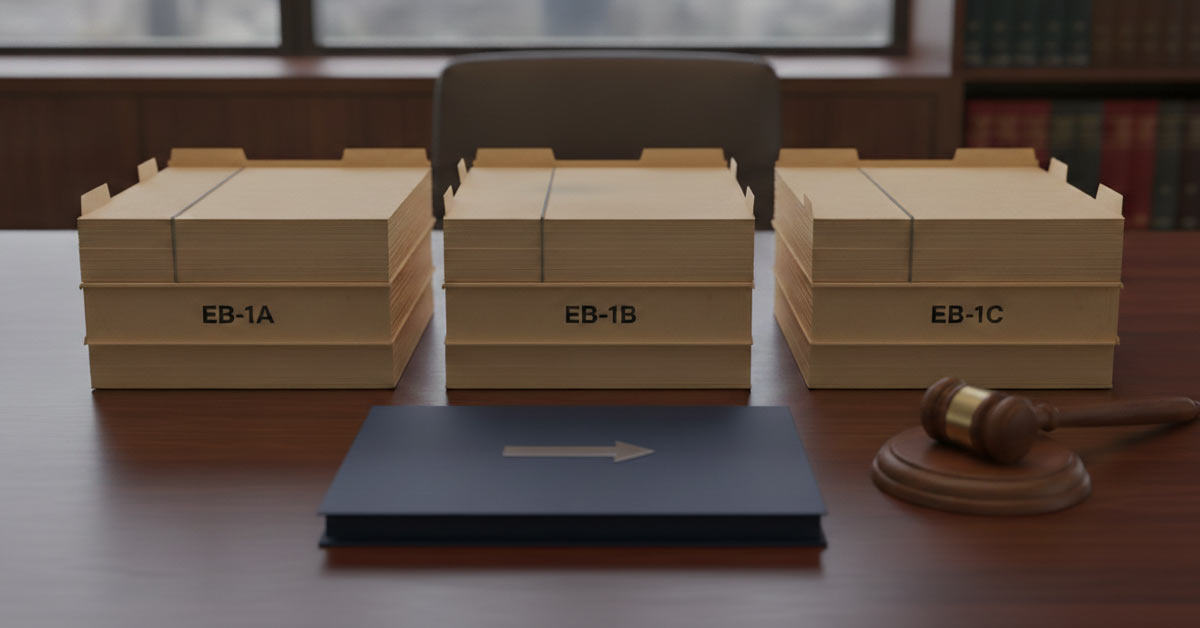
Many foreign professionals weigh the NIW against the EB-1A Extraordinary Ability visa. The EB-1A requires you to prove you have risen to the very top percentage of your field. The NIW offers a more accessible evidentiary standard, focusing on the value of your future work rather than just past accolades.
- Evidentiary Burden: NIW relies heavily on the Dhanasar criteria, which accommodates a broader range of professionals compared to the rigid 10-point Kazarian criteria of the EB-1A.
- Filing Strategy: For candidates with strong but borderline profiles, filing both an EB-1A and an EB-2 NIW simultaneously often provides the most secure route to residency. You can explore more strategies in our Talent Visas hub.
I-140 Processing, Premium Processing, and Avoiding RFEs
The NIW journey begins by filing Form I-140 with USCIS. Candidates can utilize Premium Processing to guarantee a decision or an initial response within 45 calendar days. Requests for Evidence (RFEs) typically occur when an applicant fails to clearly define their "Proposed Endeavor." Submitting a generic resume is a guaranteed path to an RFE. A winning strategy demands a highly detailed Professional Plan mapping out exactly what you will do in the U.S. and robust Expert Opinion Letters from independent industry leaders validating the national scope of your work.
Your American Journey: You Are Not Alone
Facing the EB-2 NIW process and the strict Dhanasar criteria can easily feel overwhelming. At Yellow Law Group, we operate on a core belief: the legal system should never be a roadblock to your ambitions—it should be a clear gateway to your future. We know that coming to the United States is rarely just a relocation; it is a profound, life-changing fight for safety, opportunity, and a brand-new beginning.
You do not have to walk this path alone. Our team is committed to listening to your story without judgment, providing transparent guidance, and fighting in your corner every step of the way. If you are ready to translate your professional achievements into a U.S. Green Card, schedule your free consultation today. Let’s build your winning strategy together.