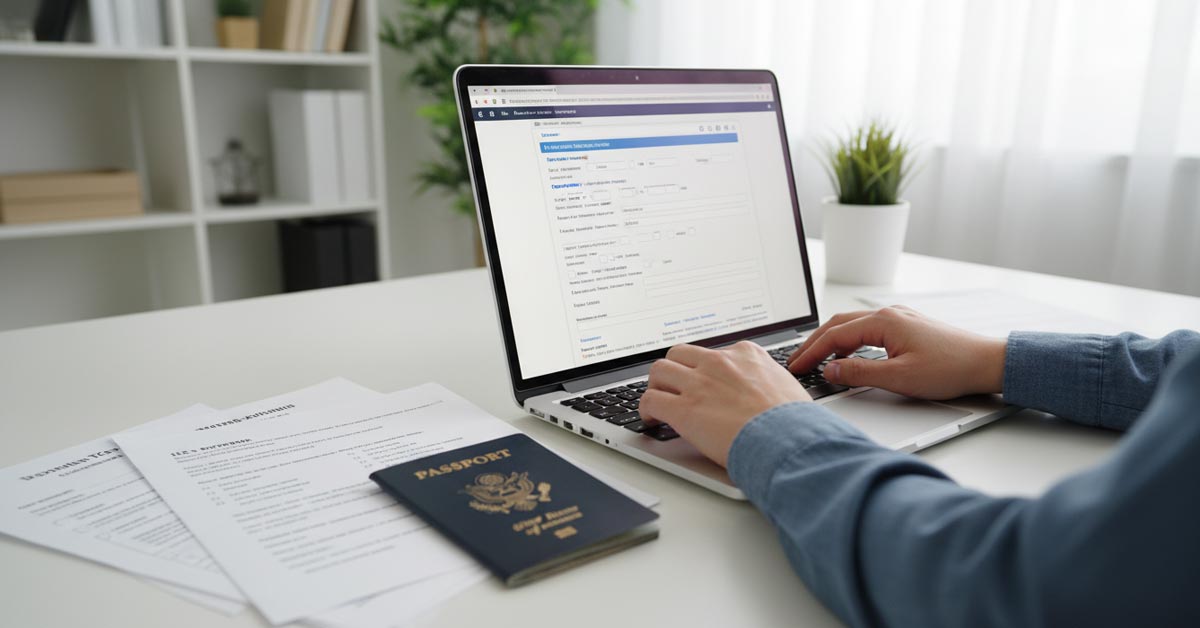
The journey to your American dream starts inside a digital portal, specifically with the DS-160 or DS-260 form. While they look like standard questionnaires, these documents act as your very first sworn statements to the U.S. government. Checking the wrong box or mistyping a single date can turn months of meticulous preparation into a sudden visa denial at the consular window.
At Yellow Law Group, we treat these forms not as administrative hurdles, but as the foundational blocks of a successful immigration strategy. Your background tells a story, and the way you translate that story into the CEAC (Consular Electronic Application Center) system dictates your future. In this guide, we break down exactly which form matches your U.S. immigration goals and how to eliminate errors that trigger delays.
The 60-Second Difference
Your core intent for entering the United States dictates which form you must file. If you plan to visit temporarily and return home, you file the DS-160. If you are pursuing permanent residency (a Green Card) through consular processing, you file the DS-260.
| Feature | DS-160 (Non-Immigrant) | DS-260 (Immigrant) |
|---|---|---|
| Primary Purpose | Temporary stays (Tourism, Study, Work) | Permanent residency (Green Card) |
| Where to Start | Directly via the CEAC website | Only after NVC (National Visa Center) approval |
| Complexity | Standard, heavily focused on security & intent | Extensive, requires full historical background |
When Do You Need the DS-160 Form?
The DS-160 is the universal application for nearly all non-immigrant visa categories. You must submit a flawless DS-160 if your goal is a short-term or temporary professional stay in the U.S.
- Business and Tourism: B-1 Business and B-2 Tourist visas.
- Education: F-1 and M-1 student visas.
- Work and Talent Visas: Beneficiaries of O-1 Visas, H-1B, L-1, or H-2B Temporary Worker petitions use this form.
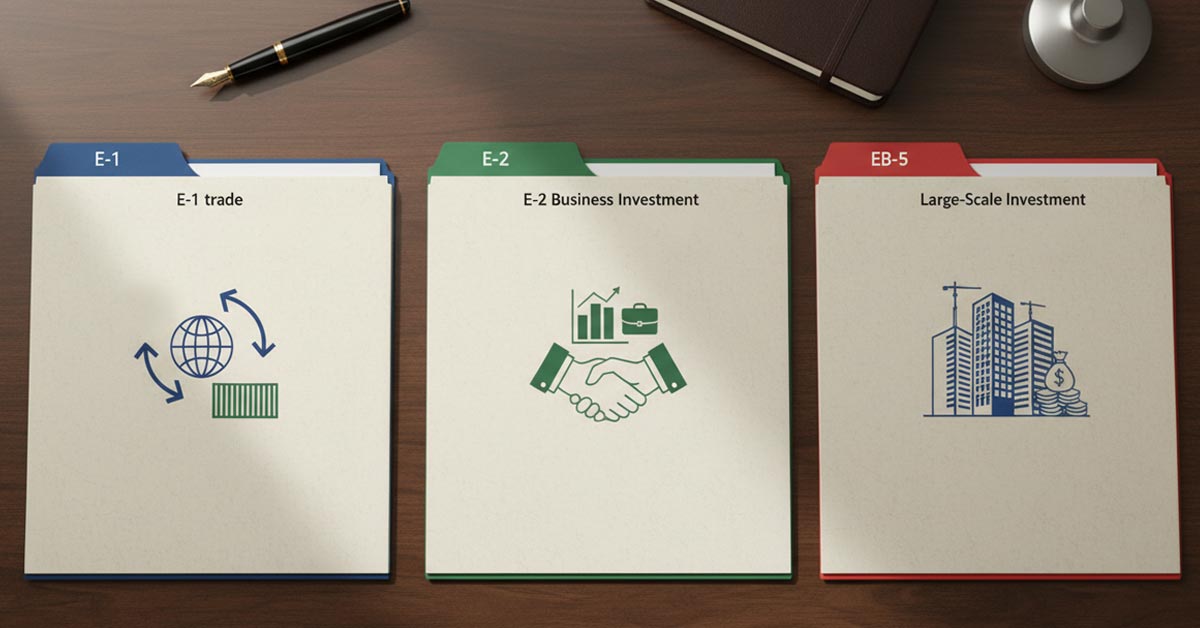
- Investors and Traders: E-2 Investor and E-1 Treaty Trader applicants file the DS-160 (some posts also require the supplemental DS-156E).
When Do You Need the DS-260 Form?
The DS-260 is strictly for foreign nationals applying for a Green Card from outside the United States. This phase is known as Consular Processing. You cannot simply log in and start a DS-260; you need an approved petition from USCIS first.
- Family-Based Immigration: Once your I-130 petition is approved under Family Reunification, the file moves to the NVC, triggering the DS-260 requirement.
- Employment-Based Immigration: If you hold an approved I-140 petition—such as an EB-2 NIW or EB-1A Visa—and you are located abroad, you will complete the DS-260 to get your immigrant visa.
Timing your DS-260 submission depends entirely on priority dates. We recommend reviewing our How to Read the U.S. Visa Bulletin guide to track your place in line.
Common Application Mistakes That Lead to Denials
A poorly prepared form often triggers Section 212(a)(6)(C)(i) findings for misrepresentation. Here is what you need to avoid:
- Timeline Inconsistencies: Mismatched dates regarding previous U.S. travel or employment history compared to your older visa applications are instant red flags.
- Social Media Omissions: The State Department requires a five-year history of your social media handles. Deleting accounts right before applying or failing to list a secondary username can be construed as fraud.
- Job Description Discrepancies: Especially for those using our Business Immigration Services, the duties described in your DS-160/260 must align perfectly with your approved USCIS petition.
The Confirmation Page and Your Interview
Pressing "Submit" is just the first victory. What follows is the Confirmation Page—your ticket into the U.S. Embassy or Consulate.
- Save the Barcode: Print the Confirmation Page immediately. The consular officer will scan this specific barcode to access your digital file.
- Scheduling the Interview: You will use your CEAC barcode number to book your biometric appointment and consular interview.
- Correcting Post-Submission Errors: You cannot edit a submitted form. If you find a critical error, you must complete a brand-new form and update the barcode number in the embassy's appointment scheduling system before your interview.
Don’t Let a Form Error Delay Your American Dream
Behind every visa application is a family seeking security, a professional chasing a breakthrough, or an entrepreneur ready to build something new. We know the stakes. A single oversight on your DS-160 or DS-260 can trigger devastating administrative delays or outright denials. At Yellow Law Group, we treat your journey with the empathy and legal precision it deserves.
You don't have to face the consular process alone. Reach out to us through our contact page for a strategic case review, and let’s get your application right the first time.